Your Career Should Have a Record
Your Career Should Have a Record Read More
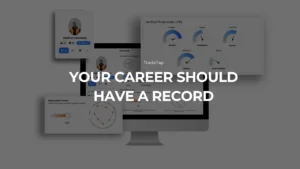
Think about everything a flooring installer can accumulate over the course of a career.
Years of hands-on experience. Manufacturer trainings. Certifications. Classes. New installation methods. New products. New specialties. Assessments. Mentorship. Industry events. Thousands of completed jobs. Lessons learned the hard way. And years spent getting better at the craft.
Now ask a surprisingly simple question:
Where does all of that live?
For many flooring professionals, there isn’t a good answer.
A certificate might be hanging on the wall. Another is buried in an email inbox. Training records may live with the organization that provided the training. Work history might exist on a resume. Experience may be backed by references from people you’ve worked with over the years.
And some of the most valuable parts of a career may not be documented anywhere at all.
For an industry we say is built on skill, that’s a problem.
A Career Should Be Cumulative
Professional growth doesn’t happen all at once.
It’s built class by class, job by job, year by year.
An installer learns something new. Earns a certification. Takes on a more difficult project. Gets trained on a new product. Develops another specialty. Works alongside someone who teaches them a better way to do something.
Each experience adds another layer to the professional they’ve become.
But the way we document those accomplishments doesn’t always reflect that.
Instead, career information often becomes fragmented across different companies, training organizations, manufacturers, systems, certificates, resumes, and relationships.
That means installers can spend years building their careers without ever building a complete professional record of that career.
And every time they encounter someone new, they’re often asked to reconstruct the story.
How long have you been installing?
What are you certified in?
What training have you completed?
What kind of work have you done?
Who have you worked for?
Can someone verify your experience?
Those are reasonable questions.
But professionals who have already put in the work should have a better way to answer them.
Your Professional History Should Follow You
An installer’s career belongs to the installer.
That means their professional history shouldn’t disappear when they change companies, move to another market, work with a new customer, or build a relationship with someone new.
Your training should follow you.
Your certifications should follow you.
Your experience should follow you.
Your professional development should follow you.
And as you continue growing, that record should grow with you.
A training completed five years ago is still part of the professional you’ve become today. So is the certification you earned last year. So are the years of experience you’ve built, the skills you’ve developed, and the continued education you’ll complete next.
None of those things exist in isolation, put together they tell the story of a career. And that story is worth telling.
Recognition Is More Than a Pat on the Back
There’s another reason documenting professional growth matters: recognition.
People invest real time, money, and effort into becoming better at what they do.
When an installer attends a training, earns a certification, develops a new skill, or adds another year of meaningful experience, that investment should count for something.
Recognition doesn’t simply mean congratulating someone for completing a class.
It means giving that accomplishment a place within the larger story of their professional development.
When that history is visible, an installer has a better way to demonstrate what differentiates them.
Instead of simply saying, “I’ve been doing this for 15 years,” they can begin to show what happened during those 15 years.
What did they learn?
What training did they pursue?
What certifications did they earn?
What skills did they develop?
How have they continued to grow?
Years of experience matter. But the number of years alone can never tell that entire story.
A professional record can.
When Professionals Benefit, the Industry Benefits
Giving installers a better way to document their careers isn’t only good for installers.
It creates better information throughout the industry.
Companies evaluating installers can see more of the professional behind the name rather than relying solely on a resume, a number of years in the trade, or word-of-mouth.
Training organizations can know that the education they provide doesn’t simply end when someone walks out of the classroom. It becomes part of that person’s continued professional development.
Manufacturers can help professionals build knowledge around their products while contributing to a larger record of training and skill.
Customers can have greater context about the professional they’re trusting to work in their home or business.
And the industry gains a clearer picture of the talent already within it.
That’s important because the flooring industry doesn’t only need to develop more skilled professionals.
It needs better ways to recognize the skilled professionals it already has.
Professional Development Shouldn’t Disappear
Think about what usually happens after a training class.
An installer learns something valuable. They may complete hands-on training, demonstrate a skill, receive a certificate, and head back to work.
The knowledge goes with them.
But what happens to the record of it?
Too often, that accomplishment becomes another isolated piece of professional history.
That’s a missed opportunity.
Because when training becomes part of a larger professional record, every new accomplishment builds on the ones that came before it.
The next class matters.
The next certification matters.
The next skill matters.
Continued education isn’t simply something a professional does from time to time. It becomes visible evidence of someone continuing to invest in their craft.
And that gives professional growth somewhere to go.
Better Information Doesn’t Replace Relationships
Flooring has always been a relationship-driven industry.
That’s a strength worth protecting.
People know who does good work. Companies build relationships with installers they trust. Trainers know the professionals who continually show up to learn. Installers build reputations over years of working alongside other people in the industry.
Technology shouldn’t replace any of that.
It should make those relationships stronger.
A professional record doesn’t eliminate the value of a reference, a conversation, a recommendation, or a reputation.
It gives those relationships better information to work with.
Instead of asking technology to decide who someone is, we can use it to make the work they’ve already done easier to see.
Building a Professional Record That Grows With You
This is one of the reasons TradeTap created the Verified Trade Index (VTI).
The VTI gives flooring professionals a place to bring their professional development together—training and certifications, professional experience, skill assessment, and continued growth—into a record that can grow alongside their career.
And as that career continues, the record doesn’t have to stop.
Training can become part of it.
New certifications can become part of it.
Additional experience can become part of it.
Continued professional development can become part of it.
Through the TradeTap Training Hub, we’re also working to make the connection between learning and professional identity stronger. Training shouldn’t become another disconnected event. It should contribute to the larger record a professional is building throughout their career.
Because professional development has more value when professionals can carry it with them.
Your Career Is the Record of What You’ve Earned
An installer shouldn’t have to rebuild the story of their career every time someone new asks what they’ve done.
The training should follow them.
The certifications should follow them.
The experience should follow them.
The growth should follow them.
Because a career isn’t a collection of disconnected moments.
It’s a record of everything you’ve earned along the way.
And what you’ve earned deserves to be recognized.
The flooring industry spends a lot of time talking about talent.
Where will the next generation of installers come from? How do we attract more people into the trade? How do companies find qualified installers? How do we replace decades of experience as longtime professionals eventually leave the workforce?
They are real questions, and there is no question that developing more skilled professionals matters to the future of the industry.
But there is another workforce problem hiding underneath them.
Even when skill exists, we’re not always very good at seeing it.
A talented installer can spend years developing their craft, attending trainings, earning certifications, learning new products, expanding into new installation disciplines, and building experience in the field.
Yet when it comes time to communicate that professional history to someone else, much of it can be surprisingly difficult to see.
A certificate here, a training record there. Years of experience listed on a profile or résumé.
Maybe a manufacturer who knows their work, or a dealer who has hired them before.
A few people in the industry who will tell you, “Yeah, they’re good.”
The skill obviously exists, the problem is visibility.
Skill Has Historically Traveled Through Relationships
Flooring is a relationship-driven industry, and we believe that’s one of its strengths.
Reputation and relationships matter. The opinion of someone you trust carries weight.
For decades, those relationships have helped skilled professionals build careers.
A company needs an installer. Someone knows someone. A recommendation gets made. A phone call happens. A relationship begins.
There is real value in that system, and technology shouldn’t try to eliminate it.
But relationships also have limitations.
What happens when the right installer isn’t already inside your network?
What happens when a skilled professional moves to a new market?
What happens when someone invests in additional training but the companies hiring them never know about it?
What happens when an installer has the exact experience a project requires, but there is no easy way for the person making the hiring decision to see it?
And what happens to the talented installer who hasn’t had enough time in the industry to build that network yet?
That’s where a relationship-driven industry can unintentionally create a visibility problem.
Years of Experience Tell Us Something. Not Everything.
We recently asked another question:
What does it actually mean to be a qualified installer?
Years of experience obviously matter.
Someone who has spent twenty years installing floors has accumulated knowledge that can’t simply be recreated in a classroom.
But two installers can both have fifteen years of experience and have very different professional histories.
One may have spent those years working primarily in one flooring discipline.
Another may have worked across several.
One may have continued attending manufacturer trainings and earning certifications throughout their career.
Another may have learned primarily through experience in the field.
Neither of those histories can be understood from “15 years of experience” alone.
Experience tells part of the story.
Training tells another part.
Certifications tell another.
Demonstrated skill tells another.
Continued professional development tells another.
The challenge isn’t that the industry has no information about its professionals. The challenge is that the information is often fragmented, and fragmented information is difficult to use.
The Visibility Problem Works Both Ways
This isn’t only an installer problem.
It’s a hiring problem, too.
Companies need skilled professionals, but finding the right professional for a specific opportunity can still depend heavily on who they already know.
That creates uncertainty.
If two installers are competing for the same opportunity and the company has limited information about either one, what becomes easy to compare?
Price.
One quote is $X.
Another quote is $Y.
That’s visible.
Training may not be.
Certifications may not be.
The types of installations someone has spent years performing may not be.
Their continued investment in professional development may not be.
And when the things that differentiate professionals aren’t visible, the things that are visible naturally carry more weight.
That’s not good for skilled installers.
And it isn’t necessarily good for the companies trying to hire them either.
The better question shouldn’t simply be:
Who can do this job for the lowest number?
It should be:
Who has the right skill and experience for this job, and what information gives me confidence in that decision?
New Talent Has an Even Bigger Visibility Problem
For someone entering the flooring industry, the challenge can be even greater.
They may have completed hands-on training, and may even understand many of the fundamentals.
They may be motivated, coachable, and ready to continue developing.
But there is one thing they cannot manufacture overnight: years of experience.
And that creates one of the oldest workforce-development problems there is.
Companies want experienced people.
New professionals need opportunities to become experienced.
Someone has to bridge the gap.
Every highly experienced installer in this industry was once inexperienced.
Every one of them had a first job.
A first crew.
A first person willing to teach them.
A first company willing to give them an opportunity.
Today’s experienced installer was once someone’s inexperienced installer.
If the industry wants to develop the next generation, we need better ways to see potential and professional development before someone has spent ten years building a reputation.
Training matters.
But training becomes much more powerful when it can be seen, recognized, and connected to opportunity.
Professional Development Shouldn’t Disappear
There is another piece of this conversation that deserves more attention.
What happens after someone completes a training?
Maybe they receive a certificate.
Maybe an organization keeps a record.
Maybe the installer saves an email or adds the credential to a résumé.
Then they go back to work.
A year later, they attend another training.
Then another.
Maybe they earn another certification.
Maybe they learn a completely different flooring discipline.
Over time, they’ve built a meaningful history of professional development.
But where does that history live?
Too often, the answer is everywhere.
And when professional development is scattered, its value becomes harder for the rest of the industry to recognize.
The future of skilled trades should give professionals a better way to carry that growth with them.
Not because a digital profile makes someone skilled.
It doesn’t.
The work makes them skilled.
The technology simply gives us a better way to see the work behind the professional.
Visibility Creates Better Connections
This is where the conversation becomes bigger than credentials.
Imagine an industry where professional development doesn’t disappear after a class.
Where installers can build a record that grows alongside their careers.
Where companies can better understand the professionals they’re considering before awarding work.
Where training organizations can see their programs translate into career development.
Where someone entering the industry can begin building a professional identity before they’ve accumulated decades of experience.
Where skill becomes easier to connect with opportunity.
That’s not about replacing relationships.
It’s about giving those relationships better information to work with.
Technology should strengthen the way people in the trades connect, not remove the people from the process.
The Industry Needs More Talent. It Also Needs to See the Talent It Already Has.
We should absolutely continue investing in training, recruiting, creating better career pathways, and supporting the experienced professionals who have spent decades building this industry.
But workforce development can’t stop at creating skill.
We also have to create the infrastructure that allows skill to travel, grow, and be recognized.
Because training creates capability, experience builds expertise, and continued development strengthens both.
But for those things to create opportunity, somebody has to be able to see them.
Skill can’t create opportunity if skill stays invisible.
Maybe one of the biggest opportunities in front of the flooring industry isn’t simply finding more talented people.
Maybe it’s building better ways to recognize the talent that’s already here, and making sure the talent we’re developing next has a clearer path to being seen.
Related Articles
Why the Flooring Industry Needs A Better Way to Measure Skill
Why Workforce Development Matters in the Skilled Trades

Reputation Matters