
Training Isn’t Enough: Workforce Development Requires Opportunity
The flooring industry talks a lot about workforce development. And we should. For years, we've discussed the labor shortage, the need to attract younger generations into the trades, the importance of professional training, and the responsibility we have to develop the next generation of skilled installers Read More
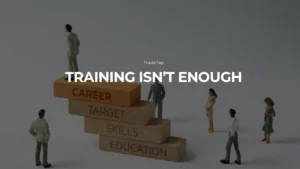
The flooring industry talks a lot about workforce development.
And we should. For years, we’ve discussed the labor shortage, the need to attract younger generations into the trades, the importance of professional training, and the responsibility we have to develop the next generation of skilled installers. Across the industry, organizations are investing time, money, and resources into doing exactly that. We’re creating training programs, partnering with schools, introducing students to the trades, building better educational opportunities, teaching people the skills needed to build a career, the list goes on. And, obviously, all of those things matter tremendously.
But there’s a question we need to get much better at asking:
What happens after the training ends?
Because training someone is only the beginning of workforce development. If there isn’t an opportunity waiting on the other side, we haven’t finished the job.
The Gap Between Training and Employment
Imagine someone decides to enter the flooring industry.
Maybe they’re graduating from a high school or community college program. Maybe they’re changing careers. Maybe they’ve completed an industry training program because someone showed them that the skilled trades could offer a real future. They show up, work, learn, and leave with foundational skills along with an interest in building a career.
And then?
That question matters more than we sometimes acknowledge.
The transition from trained candidate to working professional can be one of the most vulnerable points in the workforce-development process. Companies understandably want experienced installers. Crews are busy and may not have the capacity to find or develop new talent. Training organizations can prepare students for the field, but they aren’t always positioned to employ them. And the person standing in the middle of all of this has the hardest problem of all: “How do I get experience if everyone is looking for someone who already has it?”
If we don’t have a good answer to that question, we risk losing people we’ve already worked hard to bring into the industry.
A Certificate Can’t Be the Finish Line
Training is incredibly important. But the measure of a successful workforce-development program can’t simply be how many people complete a course. We also have to care about what happens next. Did they enter the industry? Did they find a company or crew willing to continue developing them? Did they gain real-world experience? Did they continue training? Did they stay in the trade? Did what they learned ultimately become a career?
Those outcomes tell us whether we’re actually developing a workforce.
Because the goal isn’t simply to create trained people. The goal is to create successful tradespeople. And those aren’t necessarily the same thing.
Employers Are Part of Workforce Development, Too
Training organizations can’t solve this alone. Neither can associations. Neither can manufacturers, schools, technology companies, or employers. It requires an ecosystem.
Training providers can build the foundation. Industry organizations can create standards and resources. Manufacturers can invest in education. Schools can introduce entirely new populations to career opportunities in the trades.
But eventually, someone has to say:
We’ll give you an opportunity.
There is certainly risk involved in developing new talent. But there is also risk in an industry where everyone wants experienced workers and too few organizations are helping create them.
Today’s experienced installer was once someone’s inexperienced installer.
Someone gave them a first opportunity. Workforce development requires us to keep doing the same.
We Need Career Pathways, Not Just Entry Points
Recruitment asks: How do we get someone into the trades?
Training asks: How do we give them the skills to begin?
Workforce development has to ask the bigger question: How do we help them build a career once they’re here?
That’s where career pathways become so important.
A strong pathway should allow someone to move from:
Awareness → Training → Opportunity → Experience → Continued Development → Career Growth
And ideally, every stage strengthens the next. Training creates readiness. Opportunity creates experience. Experience identifies areas for continued development. Continued development creates greater skill. Greater skill creates greater opportunity.
That’s how careers are built. And that’s how industries build sustainable workforces.
Closing the Gap
This is one of the reasons we’re building Jumpstart at TradeTap.
As we’ve worked alongside training organizations, associations, companies, and installers, we’ve continued to see the same challenge: there can be a disconnect between the organizations preparing new professionals and the companies that need them.
Jumpstart is designed to help create that bridge by connecting trained, early-career installers with companies and crews looking for new talent.
But technology alone isn’t the answer. The larger solution requires participation across the industry. Training organizations need employer relationships. Companies need visibility into emerging talent. Experienced professionals need opportunities to mentor. And new installers need somewhere to take the next step.
If we can connect those pieces, the investments we’re already making in training become significantly more powerful.
We Have To Finish What We Start
The flooring industry needs more skilled professionals. That means we absolutely need to continue recruiting. We need to continue investing in education.
We need manufacturers, associations, colleges, training organizations, and industry leaders continuing to build better ways for people to learn the trade.
But we also have to finish what we start.
When someone raises their hand and says:
“I want to build a career here.”
Our responsibility can’t end when the class does.
We need to help create the pathway that allows training to become experience, experience to become skill, and skill to become a sustainable career.
Because training creates potential. Opportunity turns that potential into a workforce. And if we’re serious about building the next generation of the flooring industry, we need both.
Related Articles

Why the Skilled Trades Need More Recognition
The Flooring Industry Doesn’t Just Have a Talent Problem. It Has a Visibility Problem.

Reputation Matters